In today’s competitive digital landscape, guessing is expensive. Website analytics and reporting give you clarity — showing exactly where your traffic comes from, how users behave, and what drives conversions. But raw data alone doesn’t grow businesses. Strategy does.
At Webquence, we transform complex data into actionable insights that help businesses increase ROI, optimize marketing spend, and improve user experience. As a top web digital agency, we focus on building analytics frameworks that align directly with business goals — not just vanity metrics.
In this guide, you’ll learn what website analytics and reporting really mean, which metrics matter most, how modern tools like GA4 work, and how professional implementation can unlock scalable growth.
What Is Website Analytics and Reporting?
Website analytics is the process of collecting, measuring, and analyzing website data to understand user behavior and performance. Reporting, on the other hand, translates that data into structured insights that support decision-making.
Think of it this way:
- Analytics = Data collection and measurement
- Reporting = Interpretation and strategic communication
Modern analytics platforms such as Google Analytics 4 (GA4) allow businesses to track:
- Website traffic
- User engagement
- Conversions
- Events and interactions
- Revenue attribution
However, simply installing GA4 is not enough. Without proper event tracking, goal configuration, funnel setup, and attribution modeling, your data may be incomplete or misleading.
Professional website analytics and reporting services ensure that your data is:
- Accurate
- Structured
- Aligned with KPIs
- Actionable
Why Website Analytics Is Critical for Business Growth
Data-driven companies consistently outperform their competitors. The reason is simple: informed decisions reduce risk and maximize return.
Here’s why website analytics and reporting matter:
1. ROI Measurement
Know exactly which marketing channels generate revenue — organic search, paid ads, social media, or email campaigns.
2. Smarter Marketing Attribution
Understand multi-touch customer journeys instead of crediting just the last click.
3. Customer Behavior Insights
Identify which pages engage users and which cause drop-offs.
4. Budget Optimization
Eliminate underperforming channels and scale what works.
5. Conversion Growth
Pinpoint friction points in your funnel and optimize them strategically.
Without analytics, marketing becomes guesswork. With it, growth becomes predictable.
Core Metrics Every Business Should Track
Not all metrics are equally valuable. Below are the essential categories that drive strategic insight.
Traffic Metrics
These show how users find your website.
- Users & New Users
- Sessions
- Traffic Sources (Organic, Paid, Referral, Direct, Social)
- Campaign Performance
Traffic analysis reveals which acquisition channels are worth scaling and which need refinement.
Engagement Metrics
Understanding user interaction is critical.
- Engagement Rate (GA4 replacement for bounce rate)
- Average Engagement Time
- Pages per Session
- Scroll Depth
- Click Tracking
If users leave quickly, the issue could be page speed, content relevance, or UX design.
Conversion Metrics
This is where revenue lives.
- Conversion Rate
- Goal Completions
- Lead Form Submissions
- Add-to-Cart Events
- Checkout Completion Rate
- Revenue per User
Advanced website analytics and reporting also include funnel visualization to identify bottlenecks.
Technical Performance Metrics
Technical issues directly impact conversions.
- Page Speed
- Core Web Vitals
- Mobile Usability
- Error Pages (404, broken links)
Poor technical performance often leads to high abandonment rates.

Essential Website Analytics Tools
A robust analytics setup combines multiple tools:
1. Google Analytics 4 (GA4)
Tracks user behavior, events, and conversions across devices.
2. Google Tag Manager (GTM)
Manages event tracking without altering core website code.
3. Google Search Console
Provides SEO performance insights and indexing status.
4. Heatmap Tools (e.g., Hotjar)
Visualize clicks, scroll behavior, and user attention.
5. Custom Reporting Dashboards
Aggregate key performance indicators into easy-to-read reports.
A fragmented setup leads to fragmented insights. That’s why integrated analytics implementation is essential.
Our Strategic Approach to Website Analytics and Reporting
At Webquence, we don’t just install tracking codes — we build structured data ecosystems designed to scale with your business.
1. Discovery & KPI Mapping
We begin by identifying:
- Business objectives
- Revenue drivers
- Primary conversion actions
- Customer acquisition channels
Every metric we track must support a defined goal.
2. Technical Implementation
We configure:
- GA4 event tracking
- Custom conversion goals
- Enhanced ecommerce tracking
- Funnel visualization
- Cross-domain tracking
- Attribution modeling
This ensures data accuracy from day one.
3. Custom Dashboard Creation
We design performance dashboards tailored to your needs:
- Marketing dashboards
- Executive-level summary reports
- Ecommerce revenue dashboards
- Lead generation tracking
Clear visualization makes insights easier to interpret.
4. Monthly Strategic Reporting
Reports should not be data dumps. They should answer questions:
- What improved?
- What declined?
- Why did it happen?
- What should we change next month?
Each report includes performance summaries and actionable recommendations.
Conversion Optimization Through Data Insights
Analytics reveal where users drop off — optimization improves it.
Using structured website analytics and reporting, we:
- Identify low-performing landing pages
- Analyze user behavior patterns
- Conduct A/B testing
- Improve CTAs
- Optimize checkout flows
- Enhance page speed
Small data-driven improvements can dramatically increase revenue over time.
For example, improving a conversion rate from 2% to 3% increases revenue by 50% without increasing traffic.
That’s the power of analytics-backed optimization.
Real-World Example: Turning Data Into Revenue Growth
A mid-sized ecommerce business approached us with declining revenue despite steady traffic.
Our findings:
- High mobile bounce rate
- Checkout funnel drop-off at shipping step
- Poor attribution modeling
Actions taken:
- Mobile UX improvements
- Simplified checkout process
- Advanced ecommerce tracking implementation
Results within 90 days:
- 27% increase in conversion rate
- 18% increase in average order value
- 32% revenue growth
Strategic analytics implementation directly impacted bottom-line performance.
Common Analytics Mistakes Businesses Make
Even experienced companies often fall into these traps:
- Tracking too many irrelevant metrics
- Not defining conversions properly
- Ignoring micro-conversions
- Failing to filter internal traffic
- Misinterpreting attribution data
- Relying on default GA4 settings
Professional website analytics and reporting services prevent these costly errors.
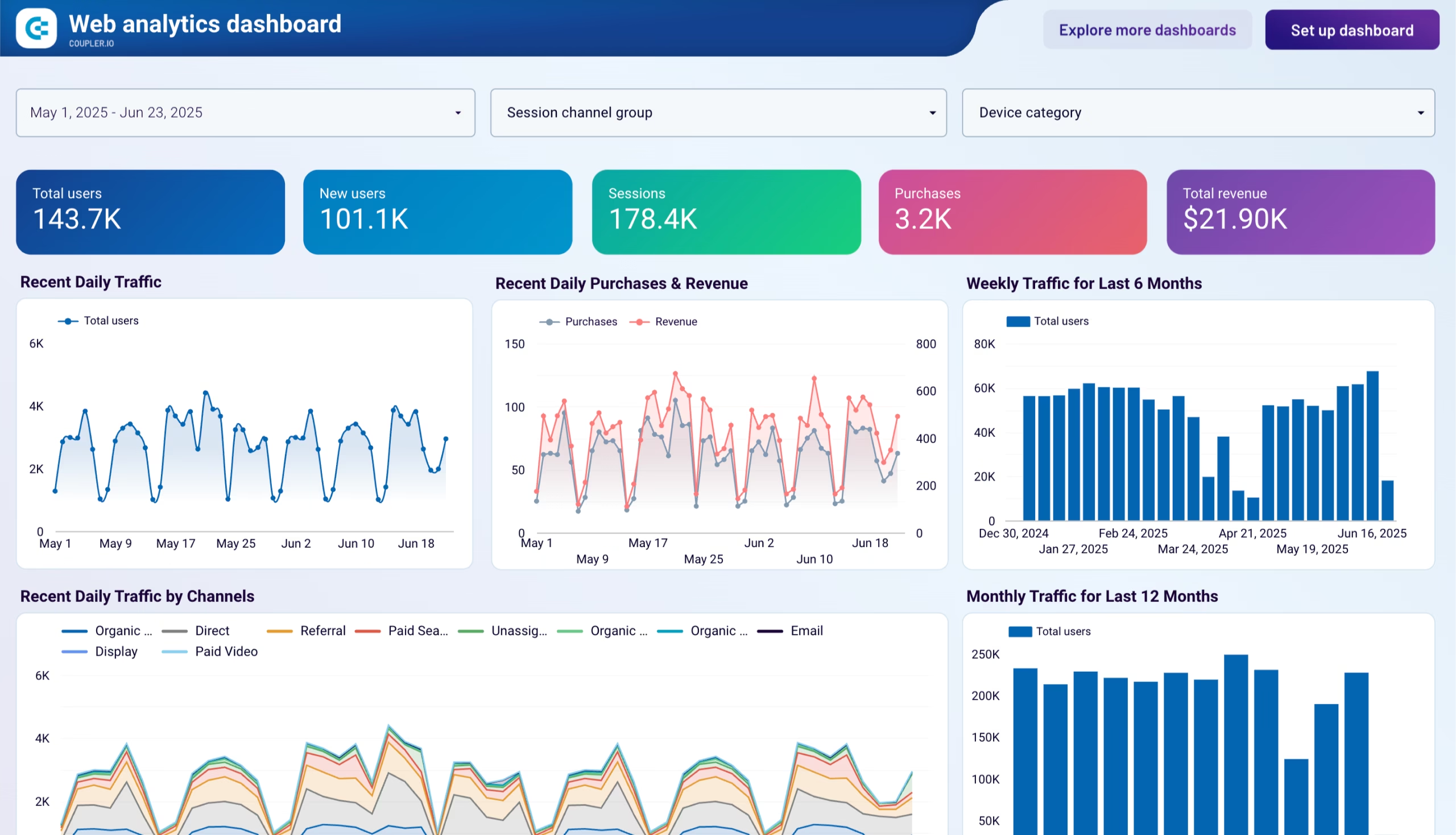
Example of a performance dashboard visualizing traffic sources, engagement, and conversion metrics.
Visual representation of data-driven funnel optimization process.
Frequently Asked Questions
What is the difference between website analytics and reporting?
Website analytics refers to data collection and measurement. Reporting interprets that data into strategic insights for decision-making.
How often should website analytics reports be generated?
Most businesses benefit from monthly reporting, with weekly monitoring for active campaigns.
Can small businesses benefit from analytics?
Absolutely. Even small websites can identify growth opportunities through structured data analysis.
Is GA4 enough on its own?
GA4 is powerful, but it requires proper configuration, event tracking, and interpretation to deliver meaningful insights.
Do I need professional analytics setup?
If growth and ROI matter, professional setup ensures accuracy, scalability, and strategic clarity.
Why Work With a Professional Digital Agency?
Website analytics and reporting are not just technical tasks — they’re strategic growth tools. Working with an experienced digital agency ensures:
- Proper KPI alignment
- Accurate tracking setup
- Advanced attribution modeling
- Clear reporting structure
- Continuous optimization
Without expertise, analytics data can easily be misinterpreted, leading to poor decisions.
Final Thoughts: Transform Data Into Strategy
Data alone doesn’t create growth. Insight does. Strategy does.
Professional website analytics and reporting allow you to:
- Track meaningful metrics
- Understand user behavior
- Improve marketing ROI
- Optimize conversions
- Scale with confidence
If your business relies on digital performance, structured analytics is no longer optional — it’s foundational.
Ready to unlock actionable insights and turn data into measurable growth? Partner with experts who understand both the technical and strategic sides of analytics.
Your next level of performance starts with clarity.